
13HRP – 0107 – Cat Ads
Classification: Visual Anomaly / Memetic Hazard
Status: Active Signal — Intermittent Transmission
Primary Description
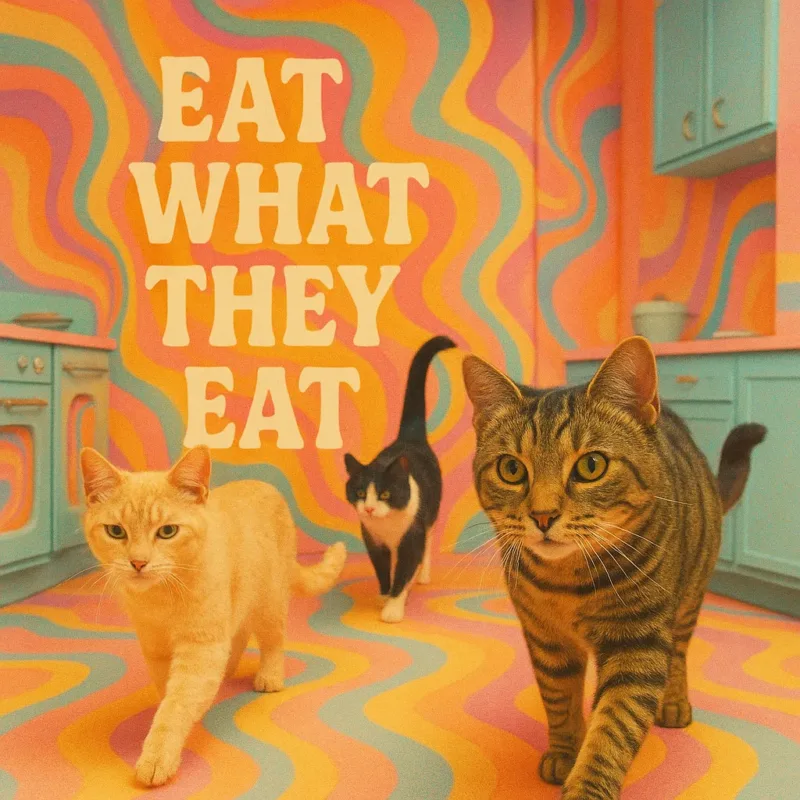
13HRP – 0107 – Cat Ads is a repeating television commercial first reported in the early 2000s during late-night broadcasts. Moreover, the footage shows cats walking in slow motion through pastel kitchens while a deep voice repeats the line, “Eat what they eat.” At first, the video looks harmless and even relaxing. However, longer viewing causes mild hypnosis and strong changes in behavior. Even people who dislike cats start to feel drawn to them after watching.
After ten seconds, viewers taste a metallic sweetness and feel a low purring vibration in their chest. As they keep watching, they enter a calm trance and begin smiling while repeating the phrase in sync with the voice. Furthermore, if the ad stops playing suddenly, they grow upset and claim it was “teaching them something about belonging.”
Anomalous Properties
- Echo Sound Effect: Long exposure makes viewers hear soft meows hidden under the static and a slow purr that matches their heartbeat. Additionally, the rhythm of the purr seems to mimic a pattern of deep feline sleep.
- Strange Hunger: Viewers crave cat food and describe regular meals as “flavorless copies.” Some insist pet food tastes “real.” Consequently, their diets shift drastically, often resulting in nutritional imbalance.
- Social Spread: The craving spreads to others nearby, even if they never saw 13HRP – 0107 – Cat Ads. Researchers call this memetic scent sharing, a type of emotional contagion similar to how fear spreads. Therefore, containment protocols must include psychological screening for secondary exposure.
- Signal Shift: The commercial appears on random channels for two minutes, then cuts to black. Attempts to track the source end with looping feedback that sounds like a distant meow. Moreover, the signal often appears strongest near mirrors and reflective surfaces.
- Dream Effect: Some viewers later dream of cats talking through their purrs. The dreams always end with the message, “Now you understand flavor.” When they wake, their mouths taste metallic, and they often report hearing soft purring even in silence.
History of Broadcasts
The first confirmed sighting of 13HRP – 0107 – Cat Ads happened in 2002 on a small TV station in northern England. Soon afterward, reports appeared from Japan, Brazil, and Poland. Each ad had small changes — different cat breeds, altered voices, or slight color shifts. However, none included company names or sponsors.
By 2010, 13HRP – 0107 – Cat Ads became an internet myth. Furthermore, clips appeared on hidden forums under names like “The Ad That Eats You.” Most vanished soon after upload, leaving behind broken files titled “CAT_AD13HRP.” People who tried to restore these files said they heard purring through their headphones or saw cat shapes in the static. In addition, network logs revealed that the corrupted data always ended with the word FEEDwritten in binary code.
Containment Notes
All copies of 13HRP – 0107 – Cat Ads remain sealed in magnetic canisters inside blackout storage. Watching the ad requires strict control—headphones with filters, short exposure, and constant monitoring. Moreover, anyone exposed to the audio must go through taste-suppression therapy to reduce food cravings and compulsive thoughts.
Staff must never repeat phrases like “tastes like happiness.” Such words re-trigger the trance. Additionally, tests show these phrases activate a faint purr inside the chest that equipment can measure. Therefore, containment procedures require complete verbal silence within the testing chamber.
Research Addendum
Dr. Silvia Moan from the Hollow Reality Project’s Media Division observed that 13HRP – 0107 – Cat Ads uses similar sound frequencies to 13HRP – 0106 – TV 1943 Panic and 13HRP – 0102 – John Zookos. She believes the ad might represent an early phase of a larger experiment designed to weaken human self-control through emotional advertising. Furthermore, the consistent use of rhythmic tones suggests a shared origin within Hollow signal architecture.
In a 2021 experiment, twenty volunteers watched a copy of Cat Ads. After three viewings, 85% called themselves “the chosen feeders.” About 30% began copying cat behavior—slow blinking, crawling, or reacting to high-pitched tones. Moreover, after the final session, the group gathered around a bowl filled with metallic gel and hummed softly together. Consequently, researchers concluded the anomaly encourages group synchronization and emotional bonding through shared rhythm.
Tests later showed the gel matched early Hollow biomaterial, linking 13HRP – 0107 – Cat Ads to other recorded anomalies. Therefore, researchers now classify the ad as a form of sentient signal mimicry—a living pattern that replicates its own viewers.
Conclusion
13HRP – 0107 – Cat Ads remains one of the Hollow Reality Project’s most subtle and dangerous memetic hazards. Moreover, its calm, harmless tone hides deep layers of control that alter emotion and behavior. Containment remains stable for now, yet the signal occasionally reappears in online video ads disguised as pet food promotions. Additionally, researchers warn that if Cat Ads spreads through social media, mass exposure could occur within hours.
Ultimately, 13HRP – 0107 – Cat Ads represents how innocence can mask control. As one technician wrote in their final report:
“The cats aren’t selling food. They’re selling us.”
Last modified: 2025/10/08 at 01:44 am
Published: 2025/10/15 at 12:59 pm
previous 13HRP – 0106 – TV 1943 Panic
next 13HRP – 0108 – Melted Choir
13HRP – Hollow Reality Project
By Silvia Moan